Strategy Beyond Conflict: Rethinking Peace Between the United States and Iran
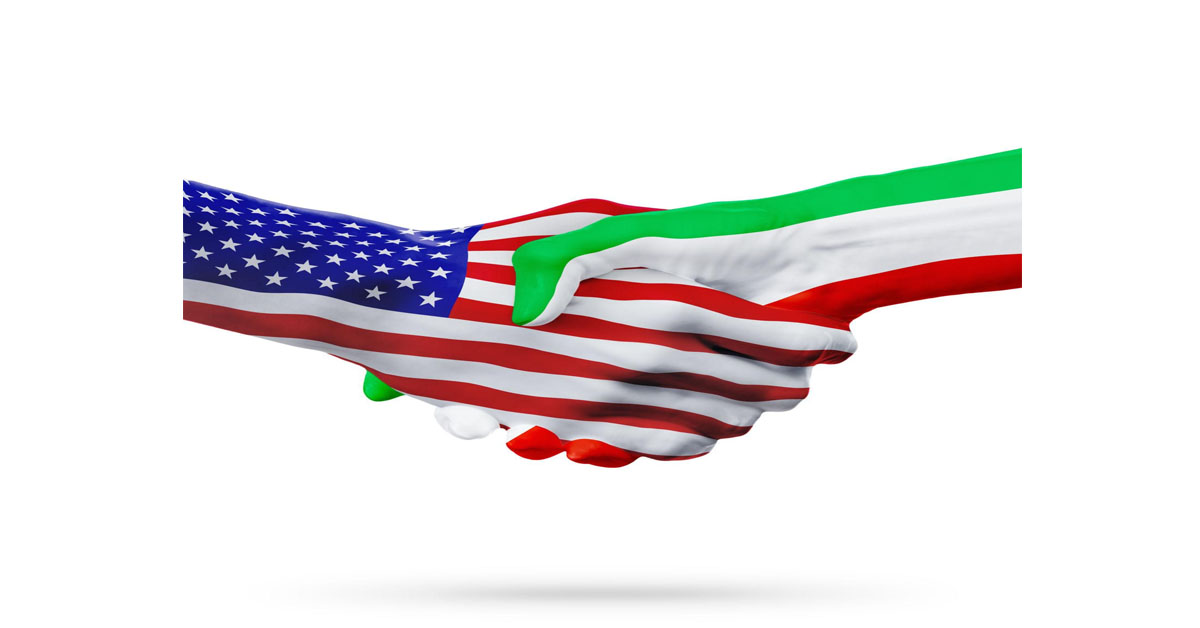
At its core, the US–Iran conflict is defined by a fundamental mismatch in strategic cultures. The United States traditionally conceptualizes conflict through defined phases – peace, crisis, and war – each governed by distinct legal and institutional frameworks. Iran, by contrast, operates within a continuum of competition, where military, political, economic, and informational tools are employed simultaneously. This divergence has consistently produced misalignment in expectations. Agreements are often negotiated within one framework but executed within another, leading to cycles of mistrust and breakdown.
The emergence of hybrid warfare as the dominant mode of conflict has further complicated this relationship. Both sides now engage across multiple domains, often below the threshold of open war. Maritime disruptions, cyber operations, proxy engagements, economic coercion, and strategic signalling have become routine instruments of statecraft. These actions are rarely isolated; they form part of a broader effort to shape the strategic environment incrementally. The absence of clear boundaries makes escalation difficult to predict and even harder to control. Yet, paradoxically, it also creates space for managed competition, where both sides avoid crossing thresholds that would trigger uncontrollable conflict.
Pathway to Peace
Any credible pathway to peace must begin with a clear-eyed understanding of power distribution within both systems. In Iran, authority is not confined to formal political offices. Strategic direction is shaped by a tightly interwoven structure in which political leadership, security institutions, and ideological authority operate in alignment. Diplomatic actors may lead negotiations, but their ability to commit the state depends on consensus across this broader framework. Ignoring this reality has been a recurring flaw in external approaches, leading to agreements that lack durability because they do not fully reflect internal power dynamics.
The United States faces a different, yet equally significant, challenge. Its policymaking process is distributed across multiple centres – executive leadership, legislative oversight, defense institutions, and intelligence agencies. This pluralistic system is not only a source of strength but it can also generate inconsistency. Signals sent through diplomacy may be undercut by parallel actions in other domains, creating ambiguity in the eyes of counterparts. For a peace strategy to succeed, Washington must ensure coherence across its instruments of power, aligning rhetoric, policy, and operational behaviour.
Military power remains a central element in this equation, not as a means of achieving victory, but as a mechanism of influence. Both sides possess capabilities that make outright war costly and uncertain. The United States retains overwhelming conventional superiority, while Iran has developed a sophisticated model of asymmetric deterrence. This includes missile forces, maritime capabilities, and a network of regional actors that extend its reach. The result is a form of mutual constraint. Neither side can impose its will decisively, yet both can impose significant costs on the other. This balance creates a strategic environment in which restraint becomes rational, even if not always consistent.
Within this context, the nuclear issue must be understood not as an isolated problem, but as part of a broader strategic calculus. For Iran, nuclear capability represents leverage, deterrence, and technological prestige. For the United States, it is a red line tied to global non-proliferation norms and regional stability. Past efforts have focused heavily on technical parameters – enrichment levels, centrifuge counts, and verification mechanisms. While these elements are essential, they do not address the underlying motivations driving the programme. A sustainable approach must integrate nuclear constraints into a wider framework that includes security assurances, regional dynamics, and economic considerations.
Economic pressure, particularly through sanctions, has been a defining feature of US policy. These measures have imposed real costs on Iran’s economy, but their strategic impact has been limited by Iran’s capacity for adaptation. Over time, Tehran has developed alternative financial networks, diversified trade relationships, and internal mechanisms to mitigate external pressure. Sanctions, in isolation, have not produced the desired political outcomes. Instead, they have often reinforced narratives of resistance and self-reliance. A more effective strategy would combine calibrated pressure with credible pathways for relief, creating incentives for constructive engagement rather than perpetual defiance.
Regional dynamics further complicate the pursuit of peace. The US–Iran rivalry is deeply embedded in the broader Middle Eastern landscape, where multiple actors pursue overlapping and sometimes conflicting interests. Israel’s security concerns, the strategic calculations of Gulf states, and the involvement of external powers all shape the trajectory of the conflict. These dynamics can either amplify tensions or contribute to stability, depending on how they are managed. A durable peace framework must therefore extend beyond bilateral engagement, incorporating regional dialogue, and confidence-building measures that address shared concerns.
Deficit of Trust
One of the most persistent obstacles to progress is the absence of trust. Decades of confrontation, broken commitments, and competing narratives have created a deeply entrenched skepticism on both sides. However, trust is not a prerequisite for diplomacy; it is a product of sustained interaction and verified outcomes. The process must begin with limited, achievable steps that demonstrate intent without requiring immediate, large-scale concessions. Humanitarian exchanges, de-escalation mechanisms in critical regions, and narrowly defined economic arrangements can serve as initial building blocks. Over time, these measures can create a foundation for more comprehensive agreements.
Equally important is the need to avoid the temptation of quick, politically driven deals. Complex conflicts cannot be resolved through simplified frameworks or short-term compromises. Agreements that lack depth and clarity are unlikely to endure, particularly in a context where implementation depends on multiple actors with differing priorities. A successful peace strategy must be patient, methodical, and grounded in a long-term vision. It must address not only immediate concerns but also the structural factors that sustain the conflict.
A realistic framework for moving forward would rest on several interrelated principles. Both sides must define objectives that are achievable within the constraints of the strategic environment. Absolute outcomes, such as complete capitulation or total dominance, are neither realistic nor necessary. Negotiations must involve all relevant centres of power, ensuring that agreements reflect internal consensus and can be implemented effectively. Progress should be incremental, with each step building confidence and creating momentum for further engagement. Regional considerations must be integrated into the process, recognizing that stability in the Middle East is inherently interconnected. Finally, the balance between deterrence and dialogue must be maintained, allowing competition to continue within managed limits.
The concept of peace in this context must itself be redefined. It does not imply the elimination of rivalry or the resolution of all differences. Instead, it represents a condition in which competition is conducted within agreed boundaries, reducing the risk of uncontrolled escalation. This form of peace is inherently fragile, requiring constant maintenance and adaptation. Yet, it is also more realistic than the pursuit of comprehensive settlements that ignore underlying tensions.
The future of US–Iran relations will be shaped not by a single decisive moment, but by a series of strategic choices. Each side must decide whether to prioritize short-term advantage or long-term stability, whether to interpret actions through the lens of suspicion or opportunity. The path to peace is neither linear nor guaranteed, but it is possible if approached with clarity, discipline, and a willingness to engage with complexity.
Ultimately, the challenge is not simply to end a conflict, but to manage it in a way that prevents escalation and creates space for cooperation. This requires a shift from reactive policymaking to proactive strategy, from isolated actions to integrated approaches. It demands an understanding that power in the modern era is multidimensional, and that effective statecraft must operate across all domains simultaneously.
In an age defined by hybrid warfare, the boundaries between war and peace will remain blurred. The task for policymakers is to navigate this ambiguity without allowing it to spiral into instability. By aligning strategic objectives, engaging the right actors, and committing to a sustained process of dialogue, the United States and Iran can move toward a more stable equilibrium. It may not resemble traditional notions of peace, but it can provide a foundation for reducing conflict and shaping a more predictable regional order.
Key Takeaway: Peace between the United States and Iran will not emerge from a single agreement or moment of diplomacy. It will be built gradually through strategic clarity, institutional alignment, and sustained engagement across military, economic, and political domains. The focus must shift from seeking decisive outcomes to managing competition responsibly. By recognizing each other’s constraints, leveraging incremental progress, and maintaining a balance between deterrence and dialogue, both sides can reduce the risks of escalation and create conditions for long-term stability.
(Nishakant Ojha is an internationally acclaimed strategic expert in geopolitics, hybrid warfare, and counter-terrorism, specializing in West Asia and Iran.)
If you like the story and if you wish more such stories, support our effort Make a donation.
Trending News
Thu Sep 24 2026 | By Cobrapost Newsdesk

Thu Sep 24 2026 | By Cobrapost Newsdesk

Wed Sep 23 2026 | By Newsdesk

Wed Sep 23 2026 | By Newsdesk

Wed Sep 23 2026 | By Newsdesk